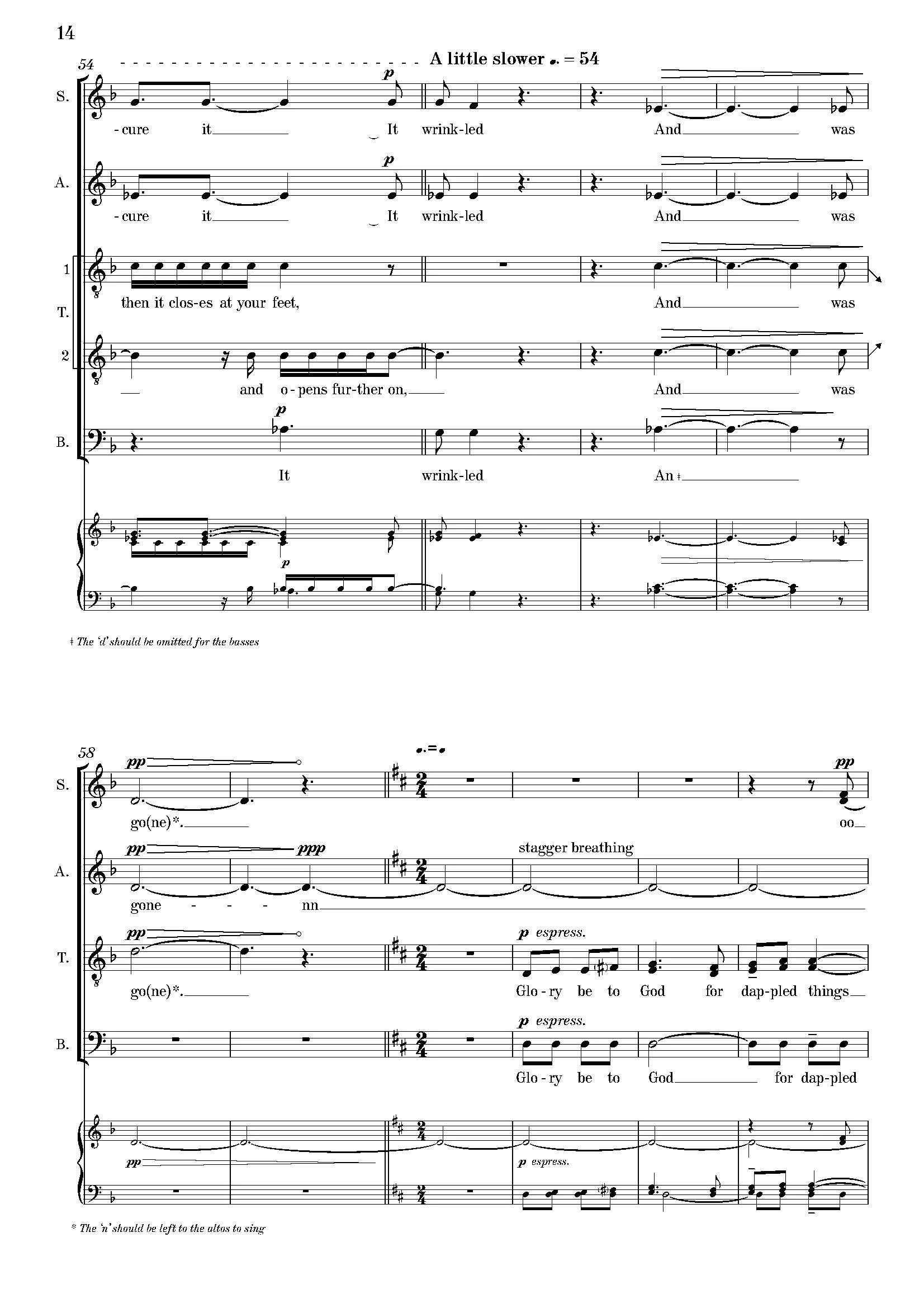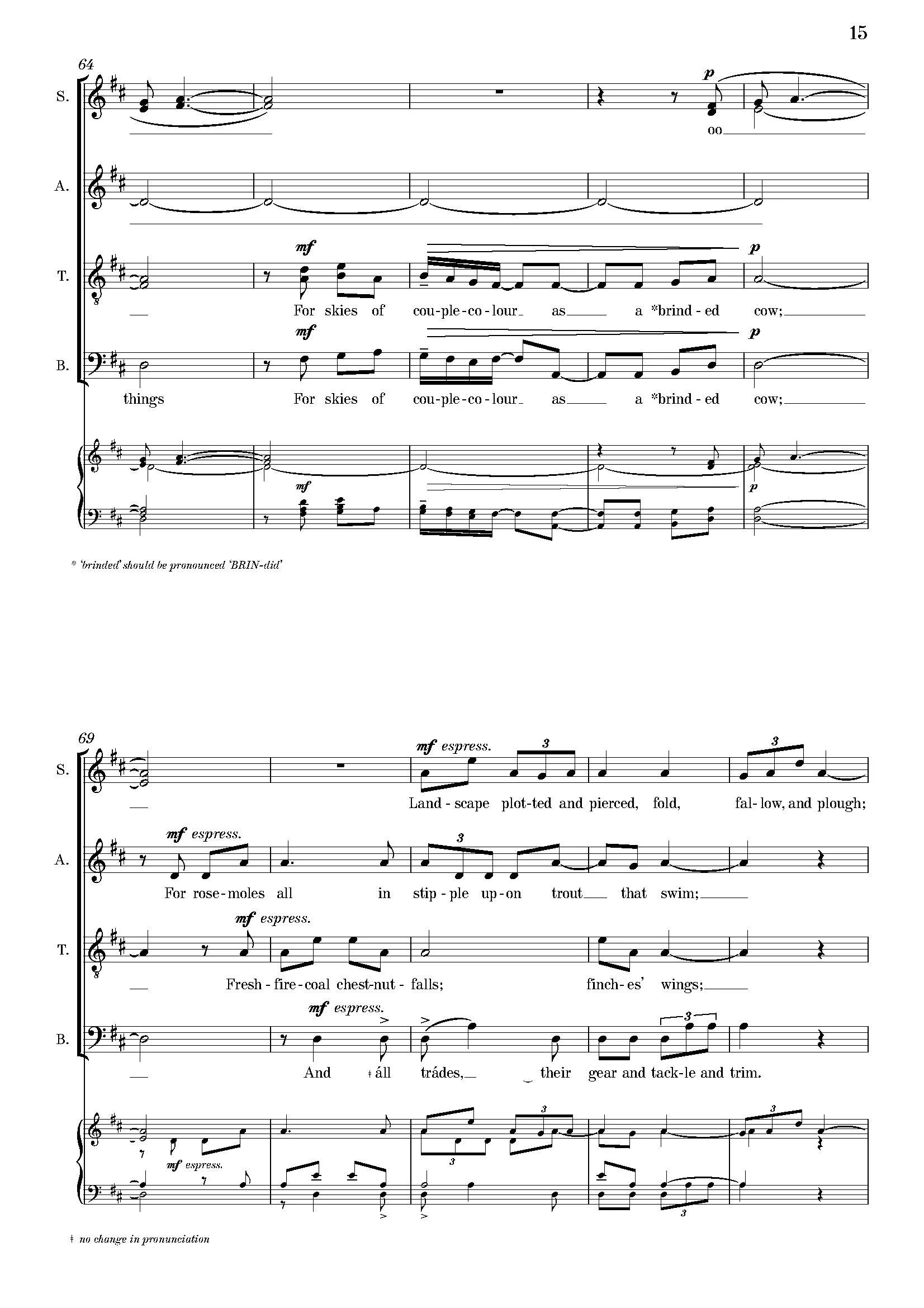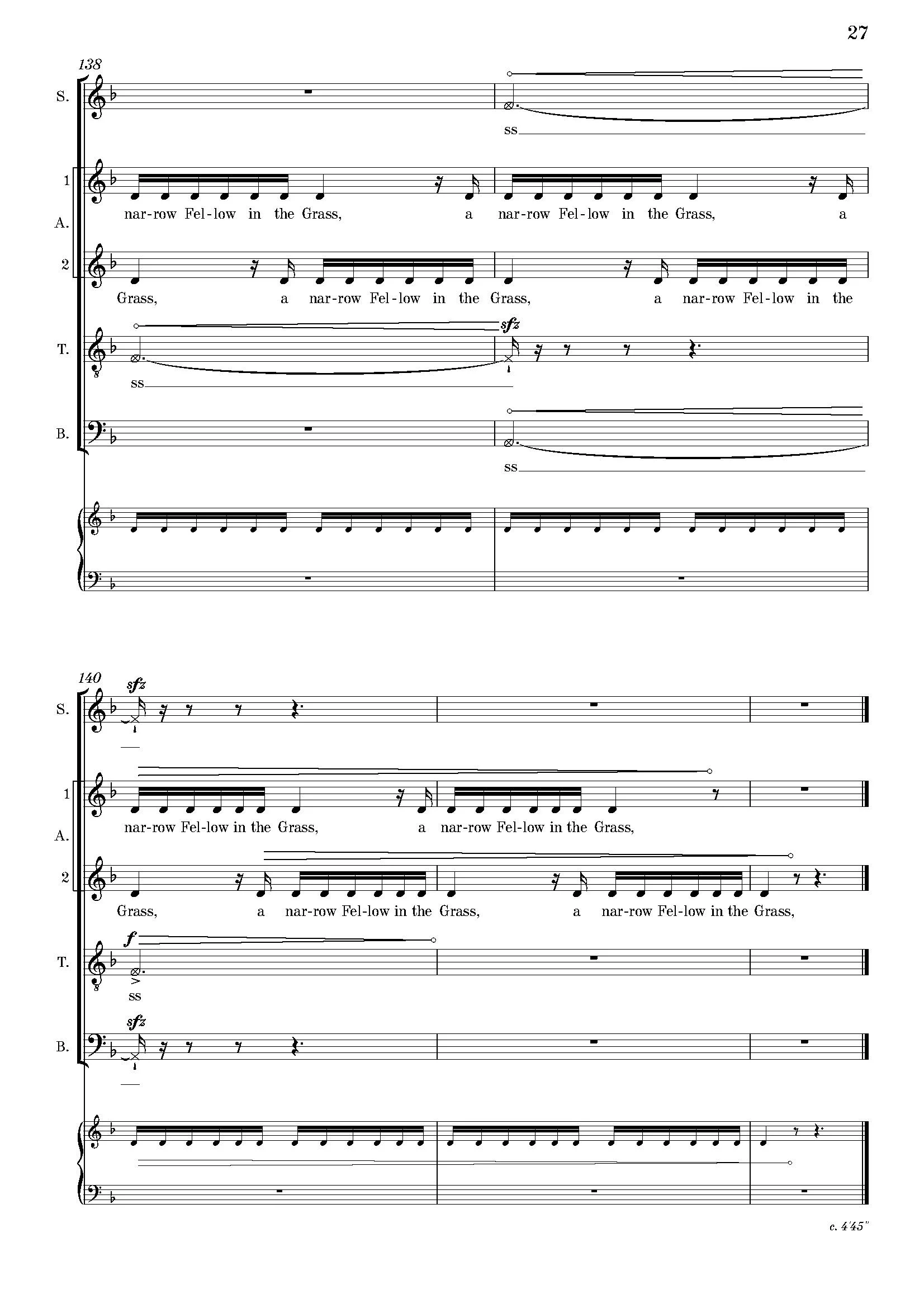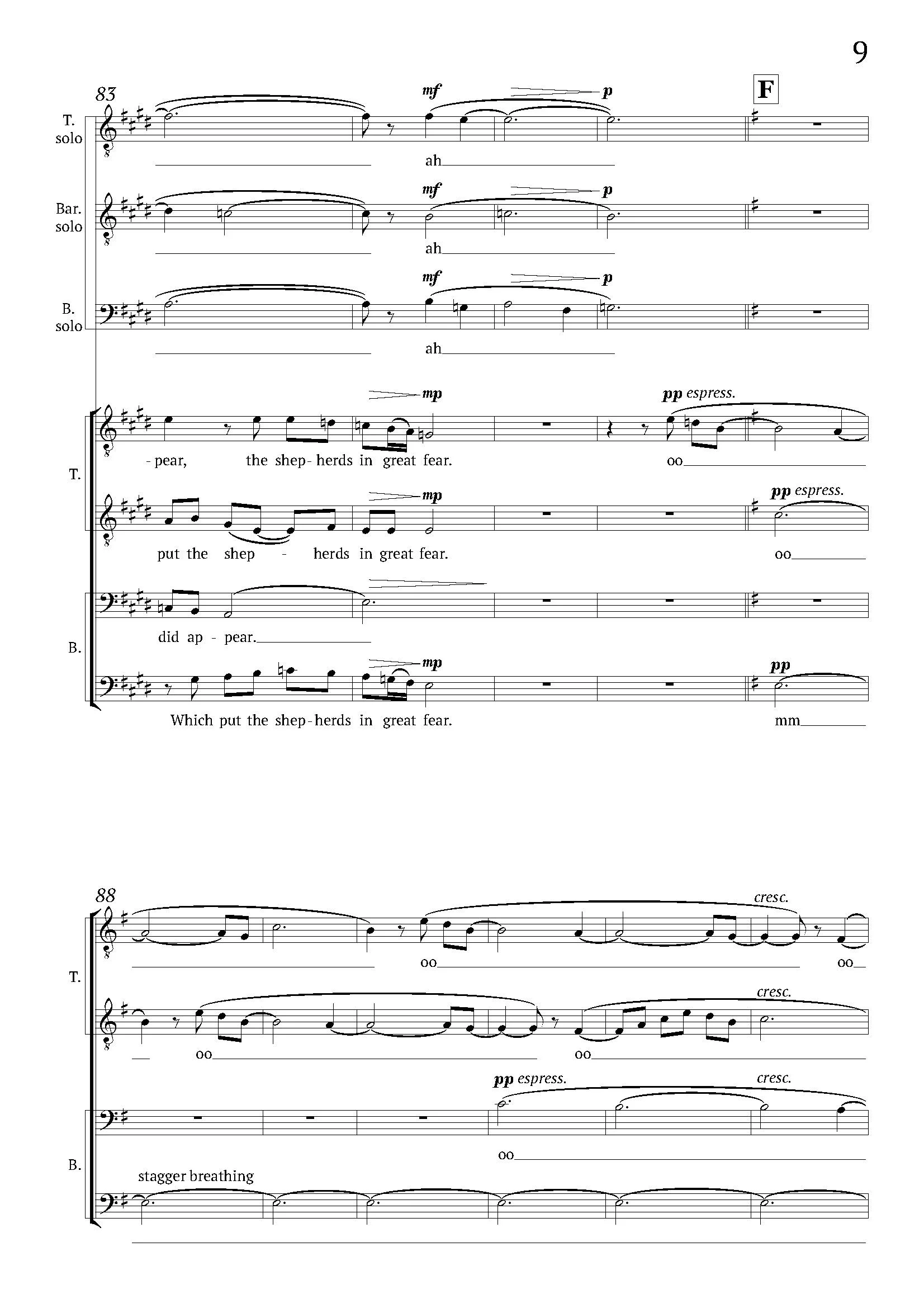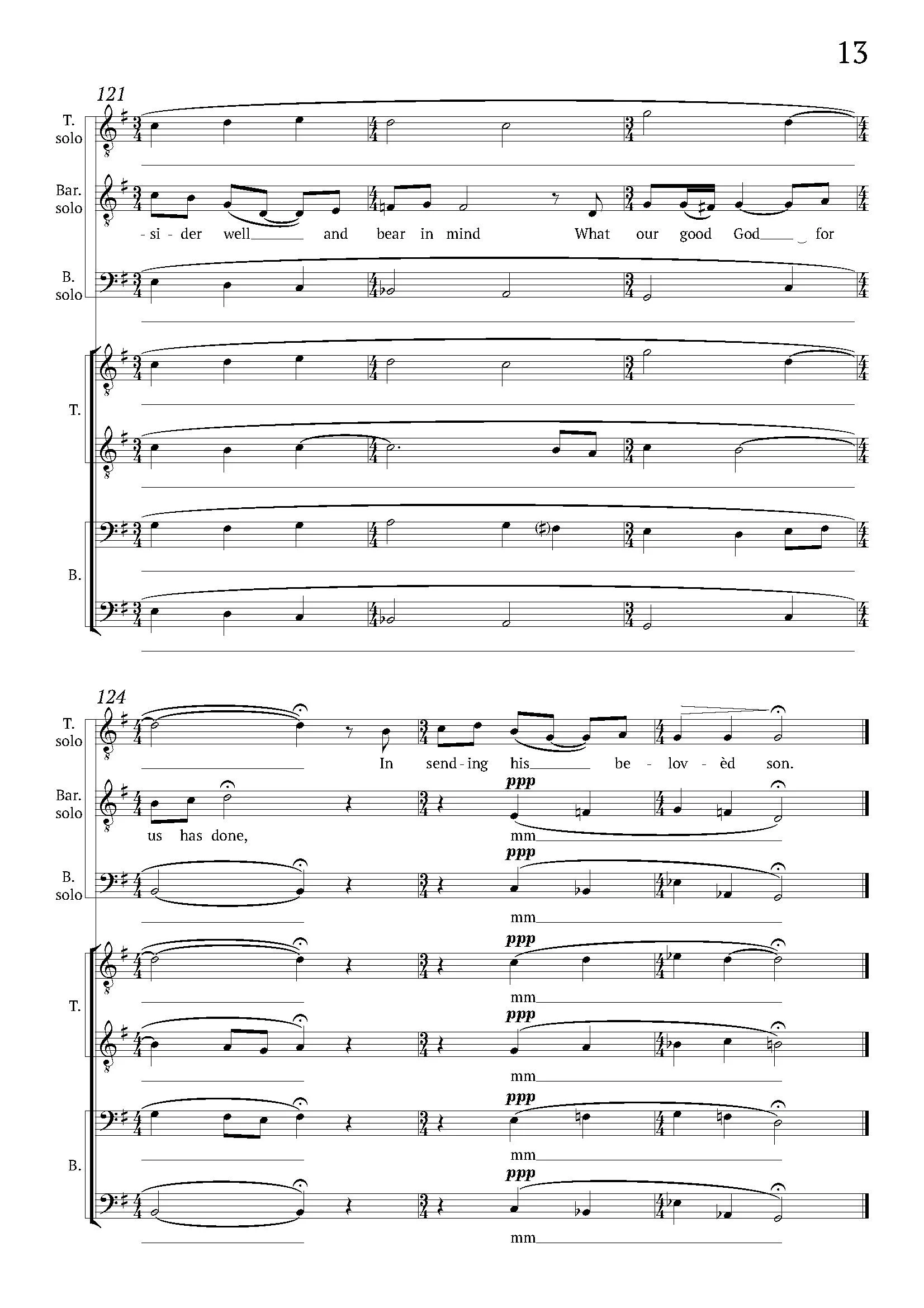
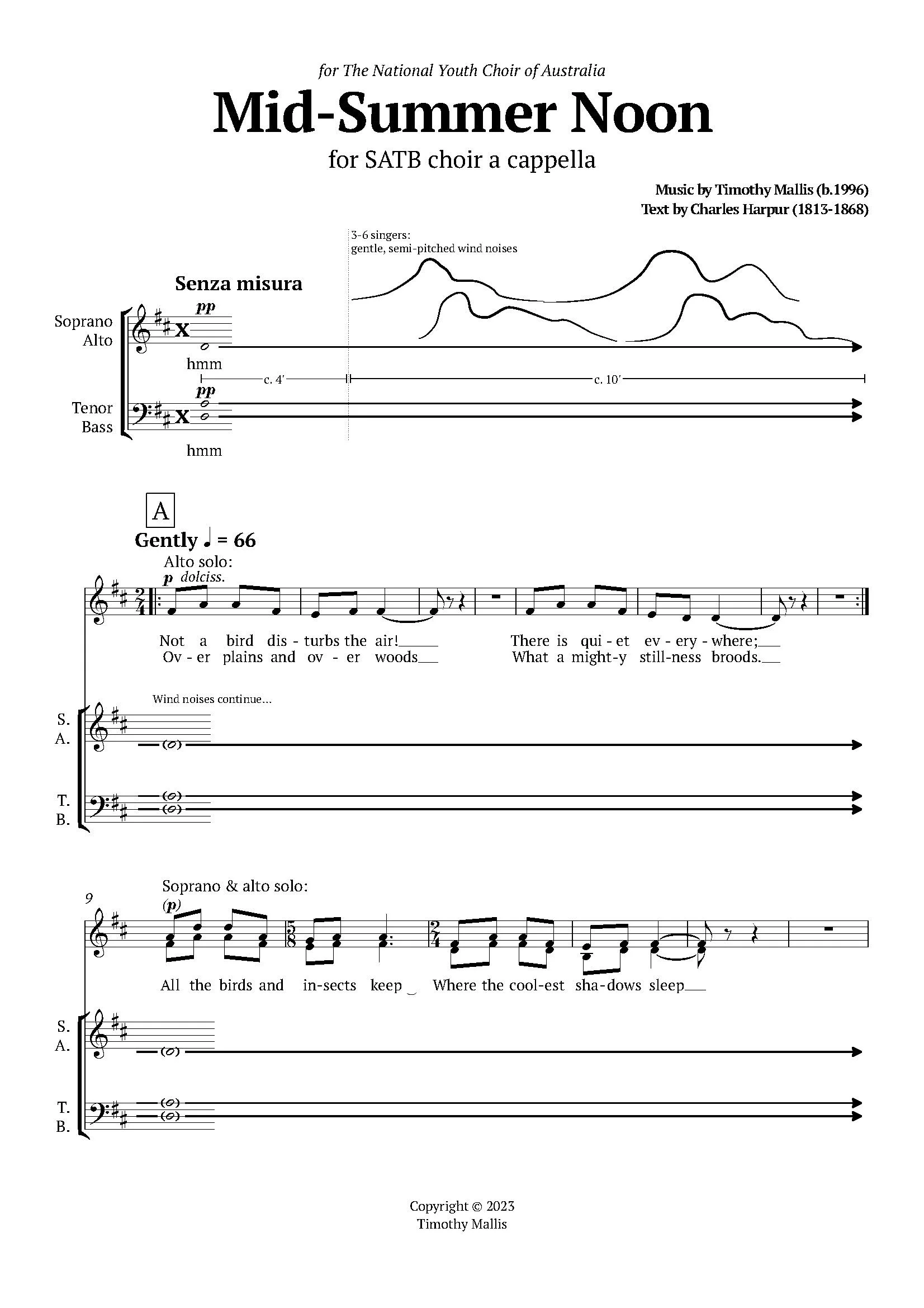
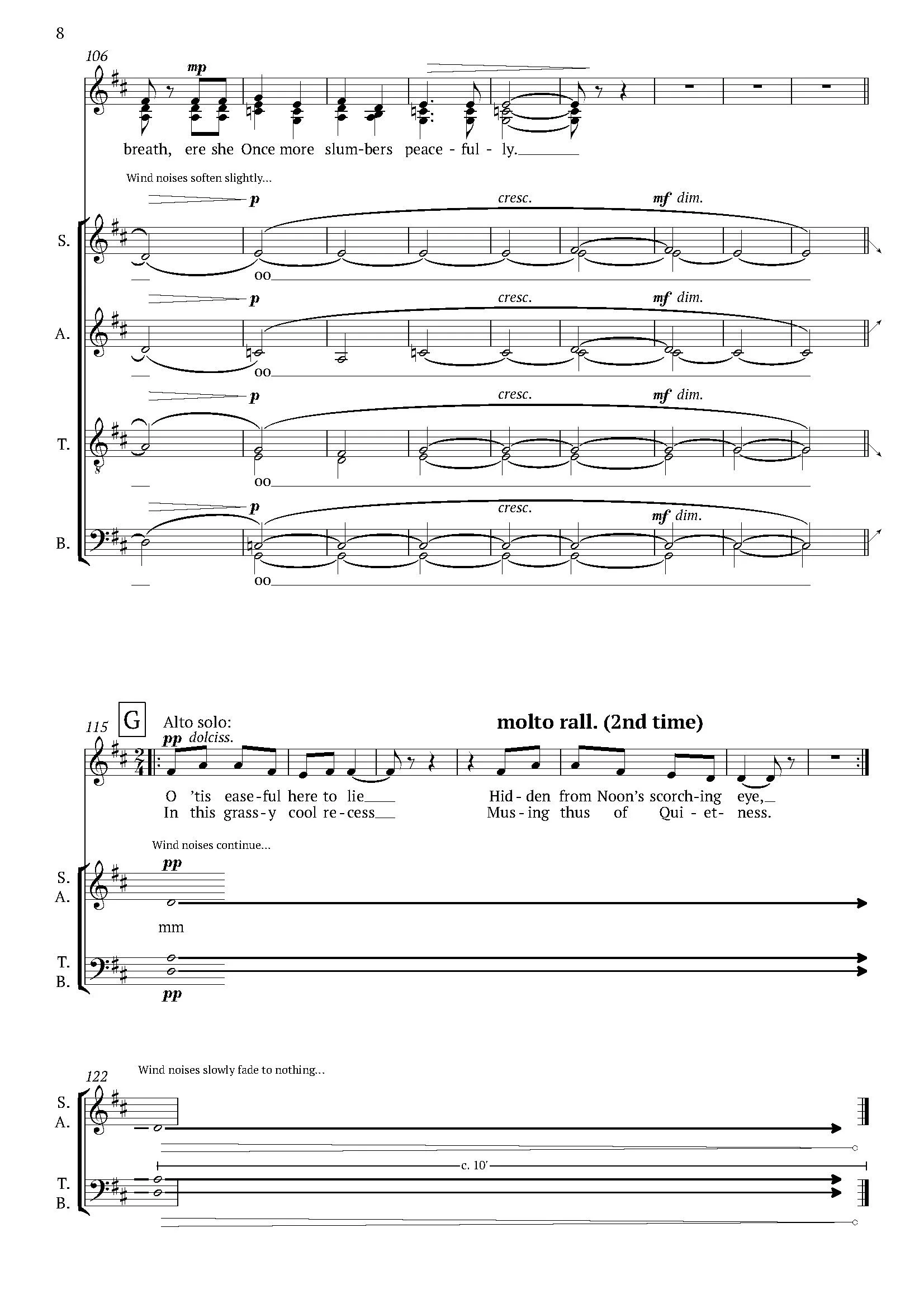
Capturing the harsh stillness of the Australian bush, Charles Harpur’s vivid poetry is set in this piece for SATB unaccompanied choir.
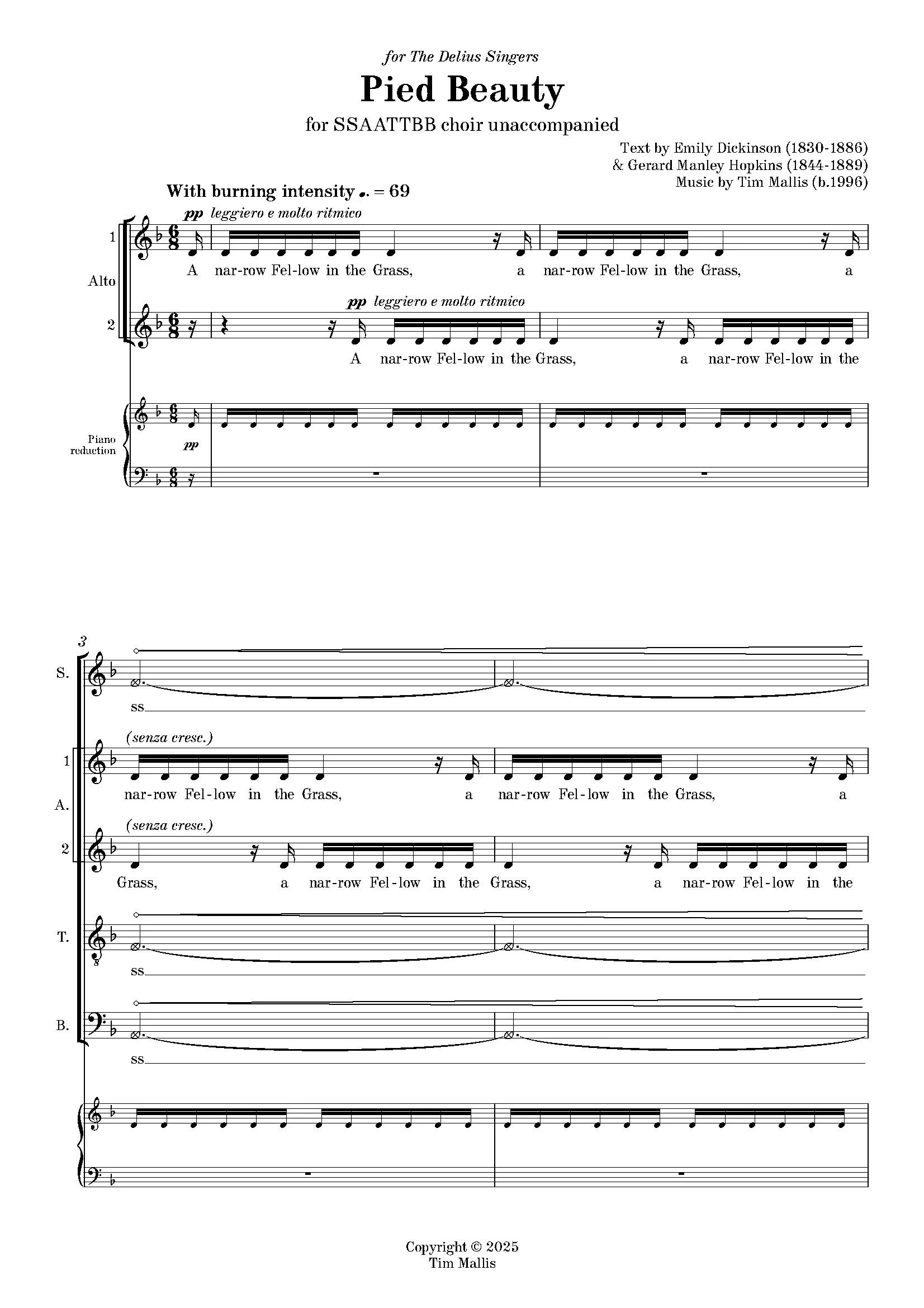
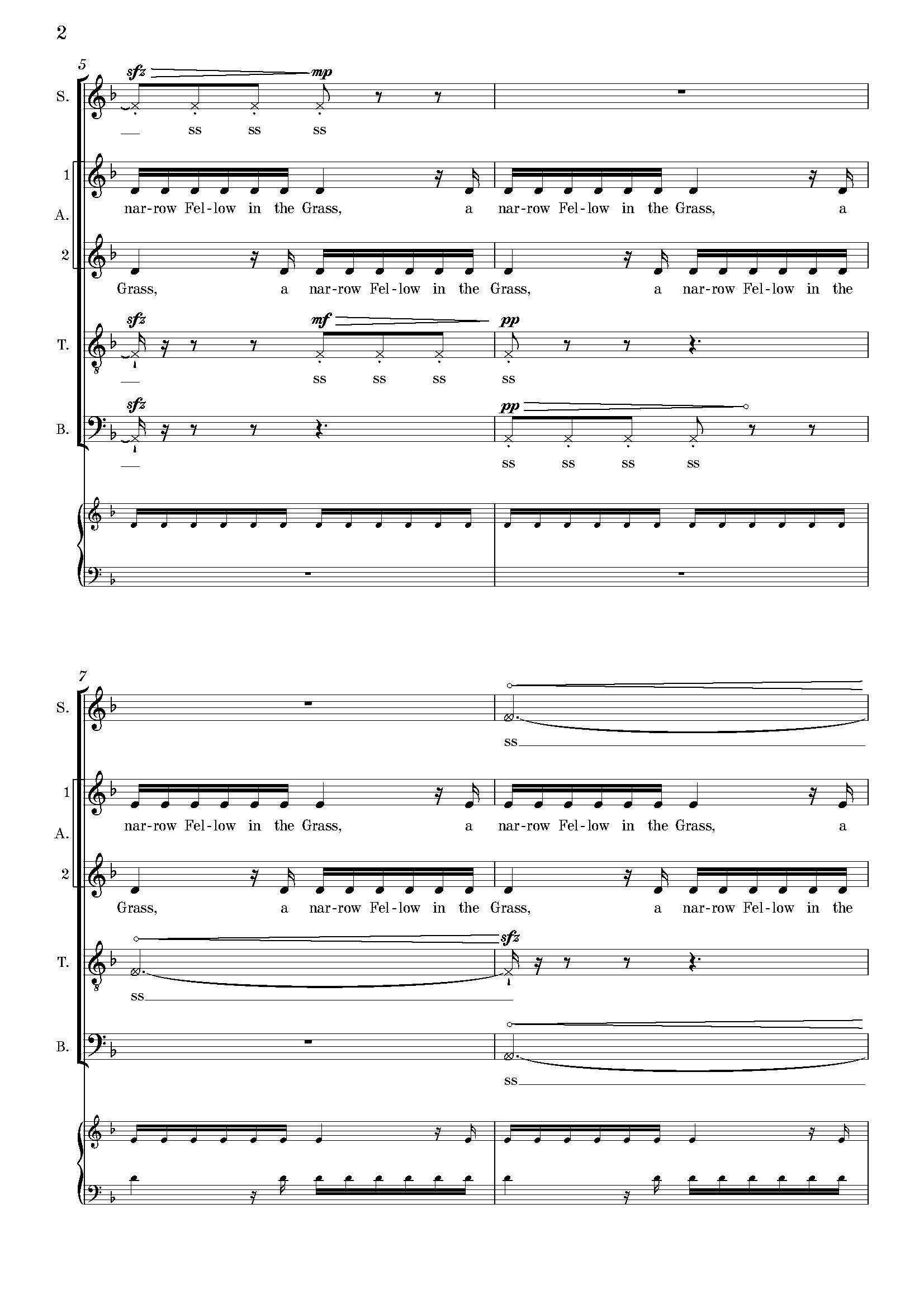
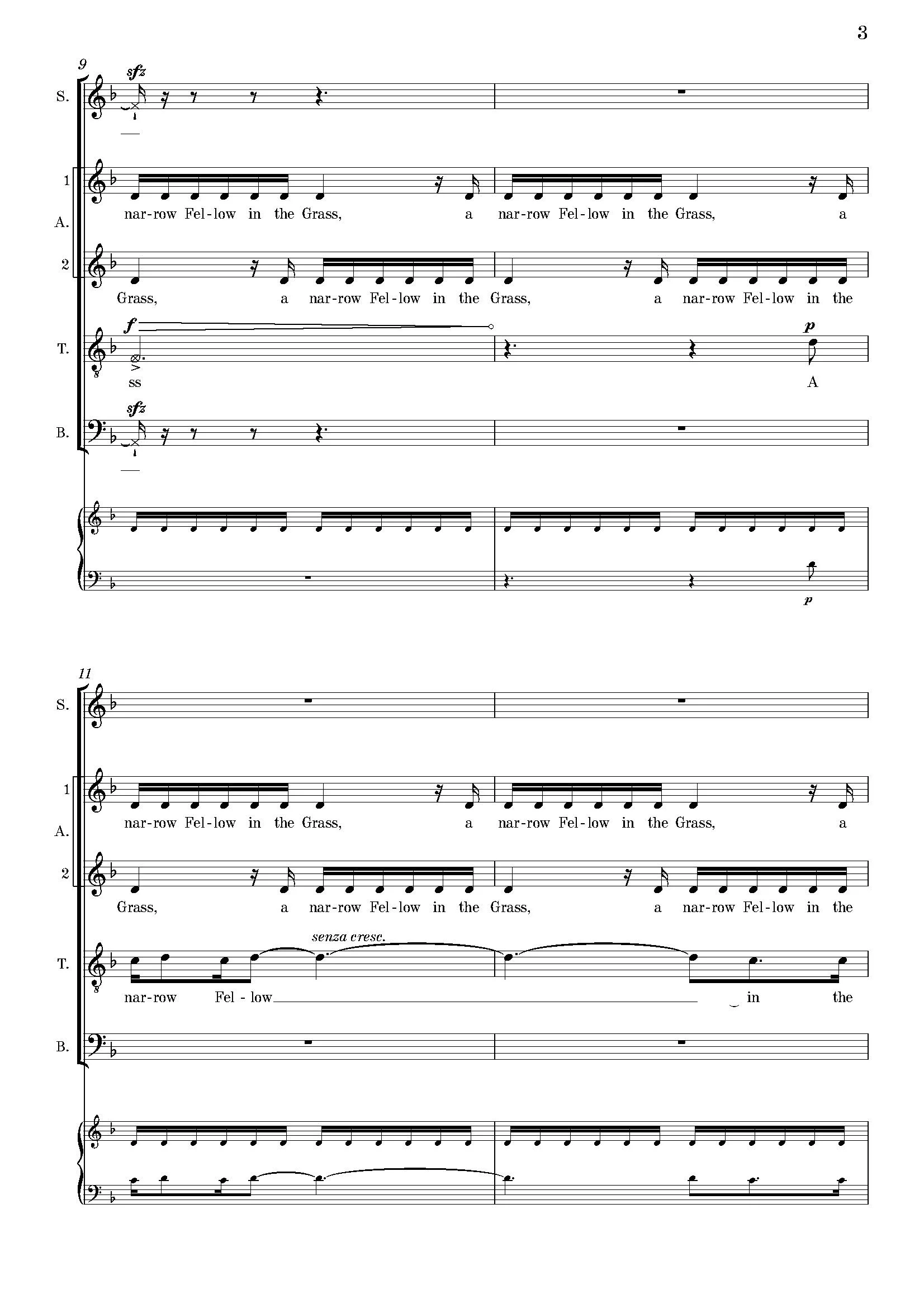
The opening captures a still expanse with a ghostly wind and solo singers carrying the text.
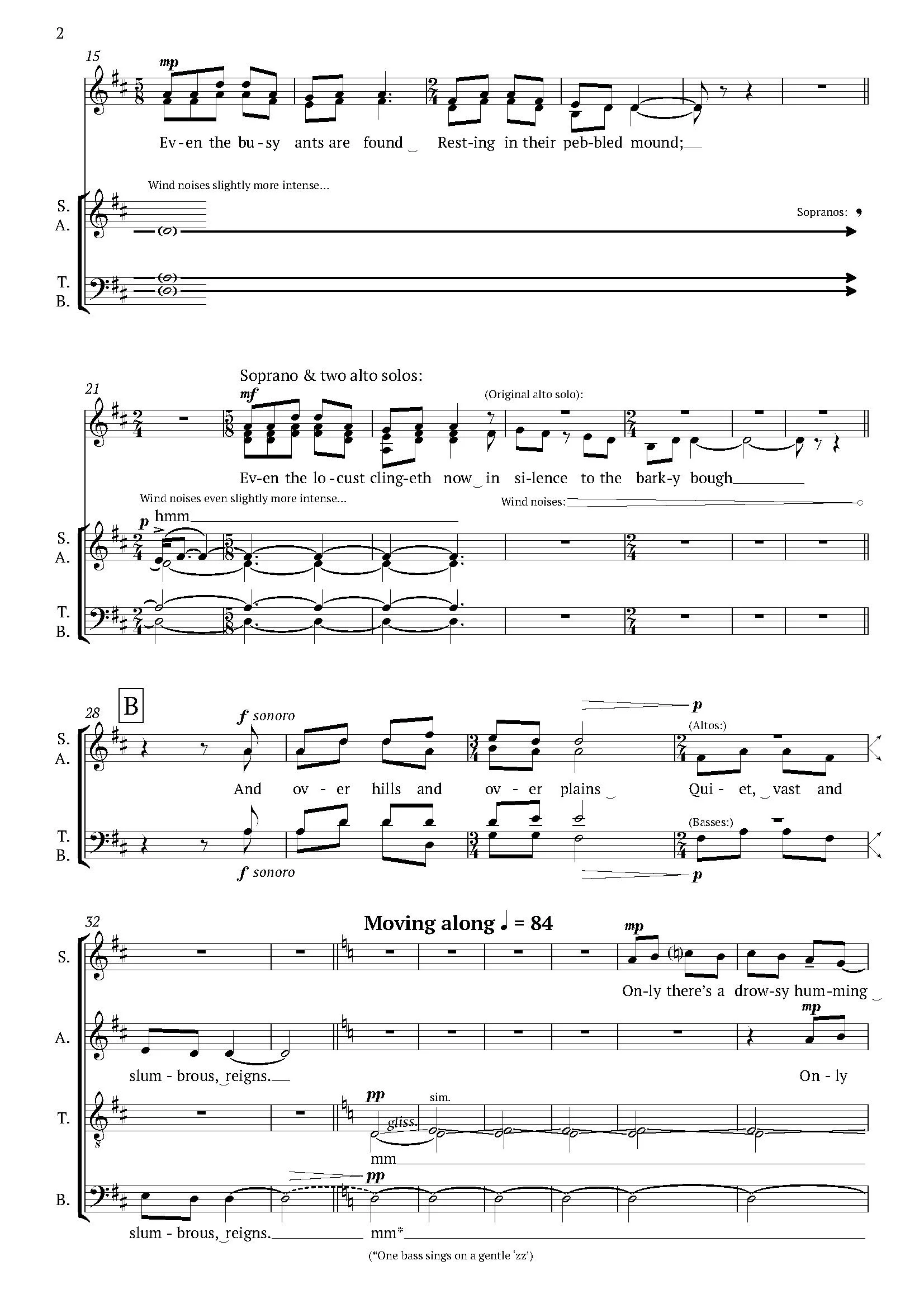
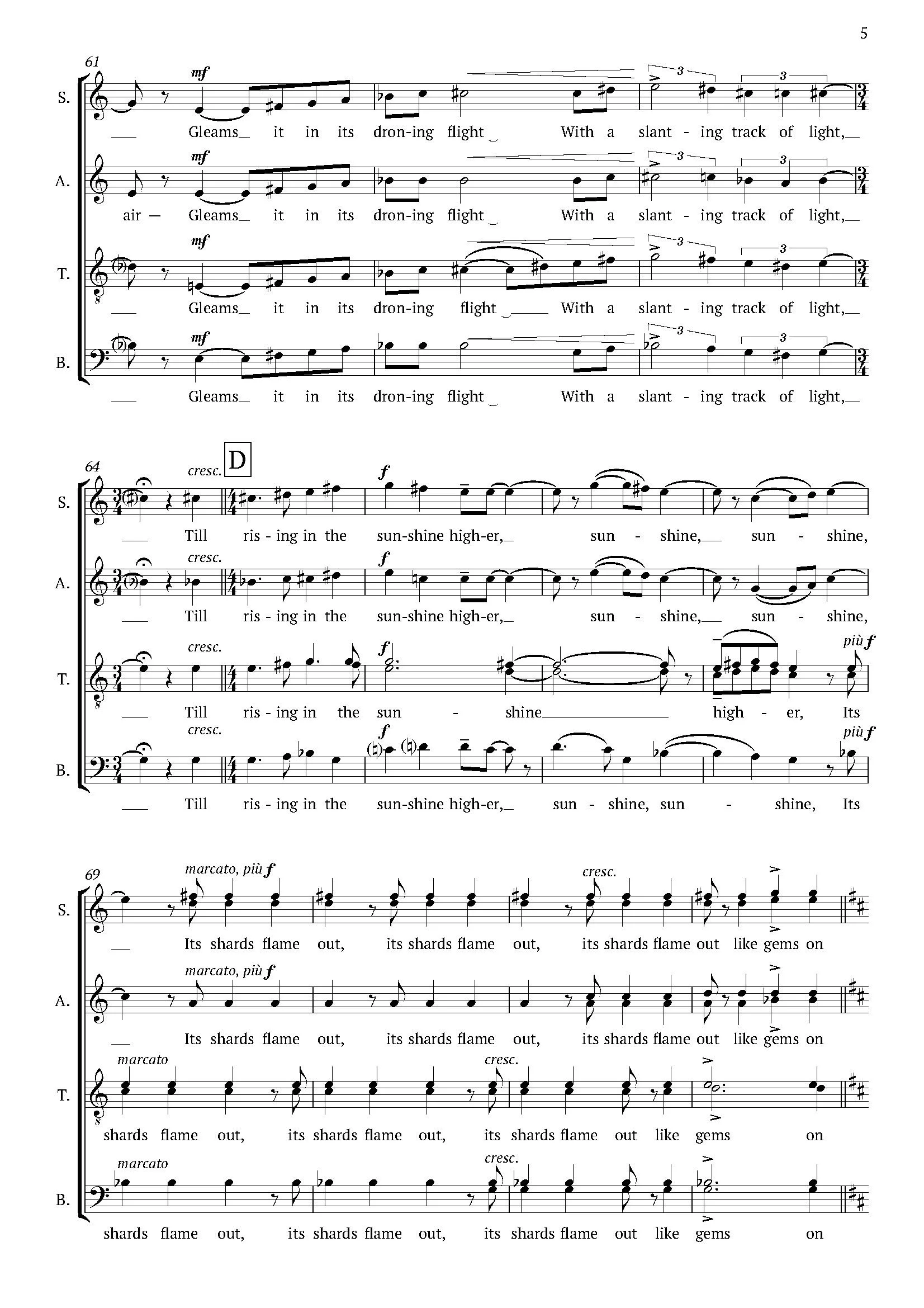
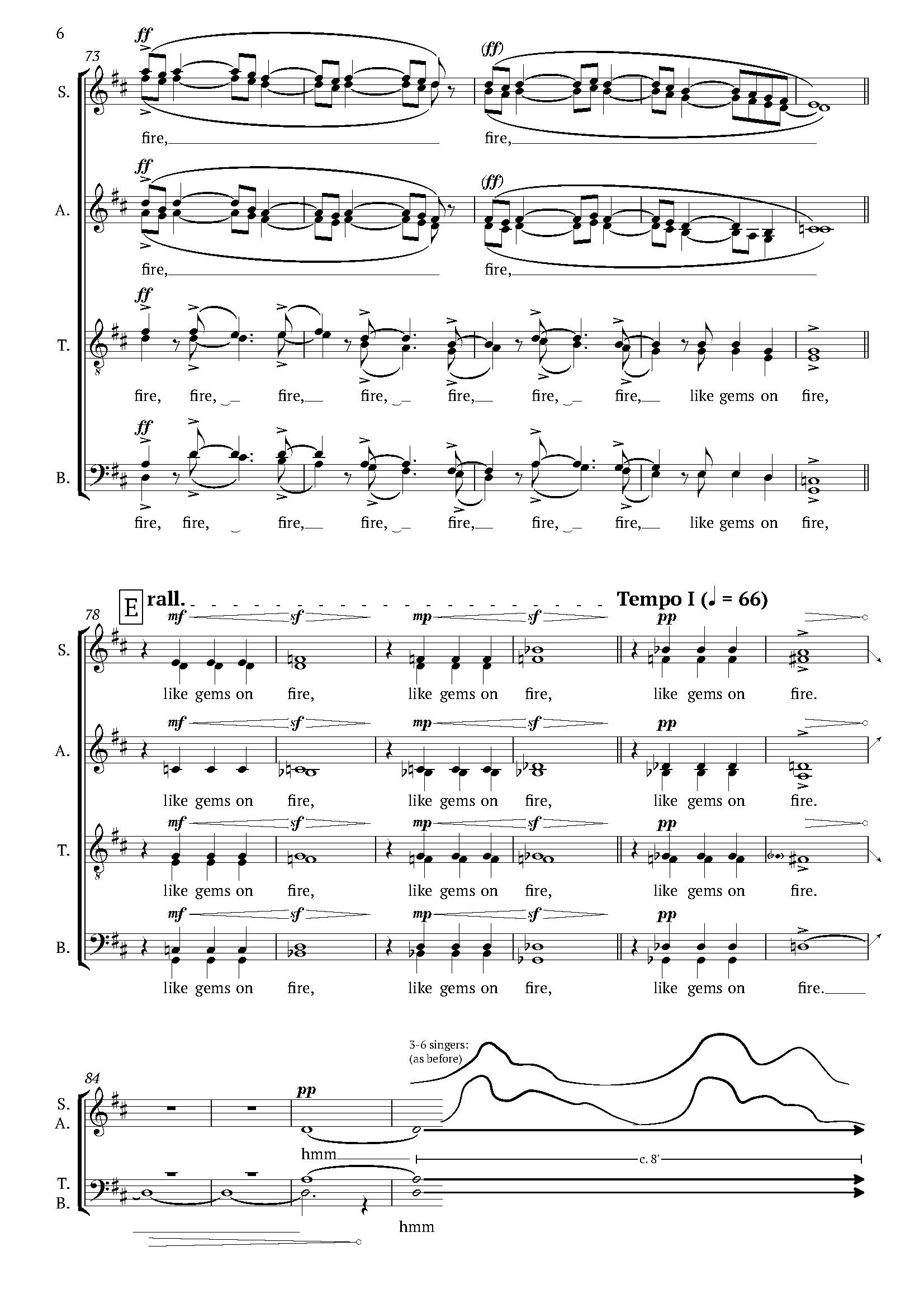
As the intensity of the text increases, so does the texture with a gradual build-up of homophony and polyphony towards the climax.
While this is possible with a small group, it is best suited to a large group of singers.
Text used from Charles Harpur’s original poem A Midsummer Noon in the Australian Forest is below:
Not a bird disturbs the air!
There is quiet everywhere;
Over plains and over woods
What a mighty stillness broods.All the birds and insects keep
Where the coolest shadows sleep
Even the busy ants are found
Resting in their pebbled mound;
Even the locust clingeth now
In silence to the barky bough
And over hills and over plains
Quiet, vast and slumbrous, reigns.Only there’s a drowsy humming
From yon warm lagoon slow coming:
‘Tis the dragon-hornet— see!
All bedaubed resplendently
With yellow on a tawny ground—
Each rich spot not square nor round,
But rudely heart-shaped, as it were
The blurred and hasty impress there,
Of vermeil-crusted seal
Dusted o’er with golden meal:
Only there’s a droning where
Yon bright beetle gleams the air—
Gleams it in its droning flight
With a slanting track of light,
Till rising in the sunshine higher,
Its shards flame out like gems on fire.Every other thing is still,
Save the ever wakeful rill,
Whose cool murmur only throws
A cooler comfort round Repose;
Or some ripple in the sea
Of leafy boughs, where, lazily,
Tired Summer, in her forest bower
Turning with the noon-tide hour,
Heaves a slumbrous breath, ere she
Once more slumbers peacefully.O ‘tis easeful here to lie
Hidden from Noon’s scorching eye,
In this grassy cool recess
Musing thus of Quietness.
Capturing the harsh stillness of the Australian bush, Charles Harpur’s vivid poetry is set in this piece for SATB unaccompanied choir.
The opening captures a still expanse with a ghostly wind and solo singers carrying the text.
As the intensity of the text increases, so does the texture with a gradual build-up of homophony and polyphony towards the climax.
While this is possible with a small group, it is best suited to a large group of singers.
Text used from Charles Harpur’s original poem A Midsummer Noon in the Australian Forest is below:
Not a bird disturbs the air!
There is quiet everywhere;
Over plains and over woods
What a mighty stillness broods.All the birds and insects keep
Where the coolest shadows sleep
Even the busy ants are found
Resting in their pebbled mound;
Even the locust clingeth now
In silence to the barky bough
And over hills and over plains
Quiet, vast and slumbrous, reigns.Only there’s a drowsy humming
From yon warm lagoon slow coming:
‘Tis the dragon-hornet— see!
All bedaubed resplendently
With yellow on a tawny ground—
Each rich spot not square nor round,
But rudely heart-shaped, as it were
The blurred and hasty impress there,
Of vermeil-crusted seal
Dusted o’er with golden meal:
Only there’s a droning where
Yon bright beetle gleams the air—
Gleams it in its droning flight
With a slanting track of light,
Till rising in the sunshine higher,
Its shards flame out like gems on fire.Every other thing is still,
Save the ever wakeful rill,
Whose cool murmur only throws
A cooler comfort round Repose;
Or some ripple in the sea
Of leafy boughs, where, lazily,
Tired Summer, in her forest bower
Turning with the noon-tide hour,
Heaves a slumbrous breath, ere she
Once more slumbers peacefully.O ‘tis easeful here to lie
Hidden from Noon’s scorching eye,
In this grassy cool recess
Musing thus of Quietness.